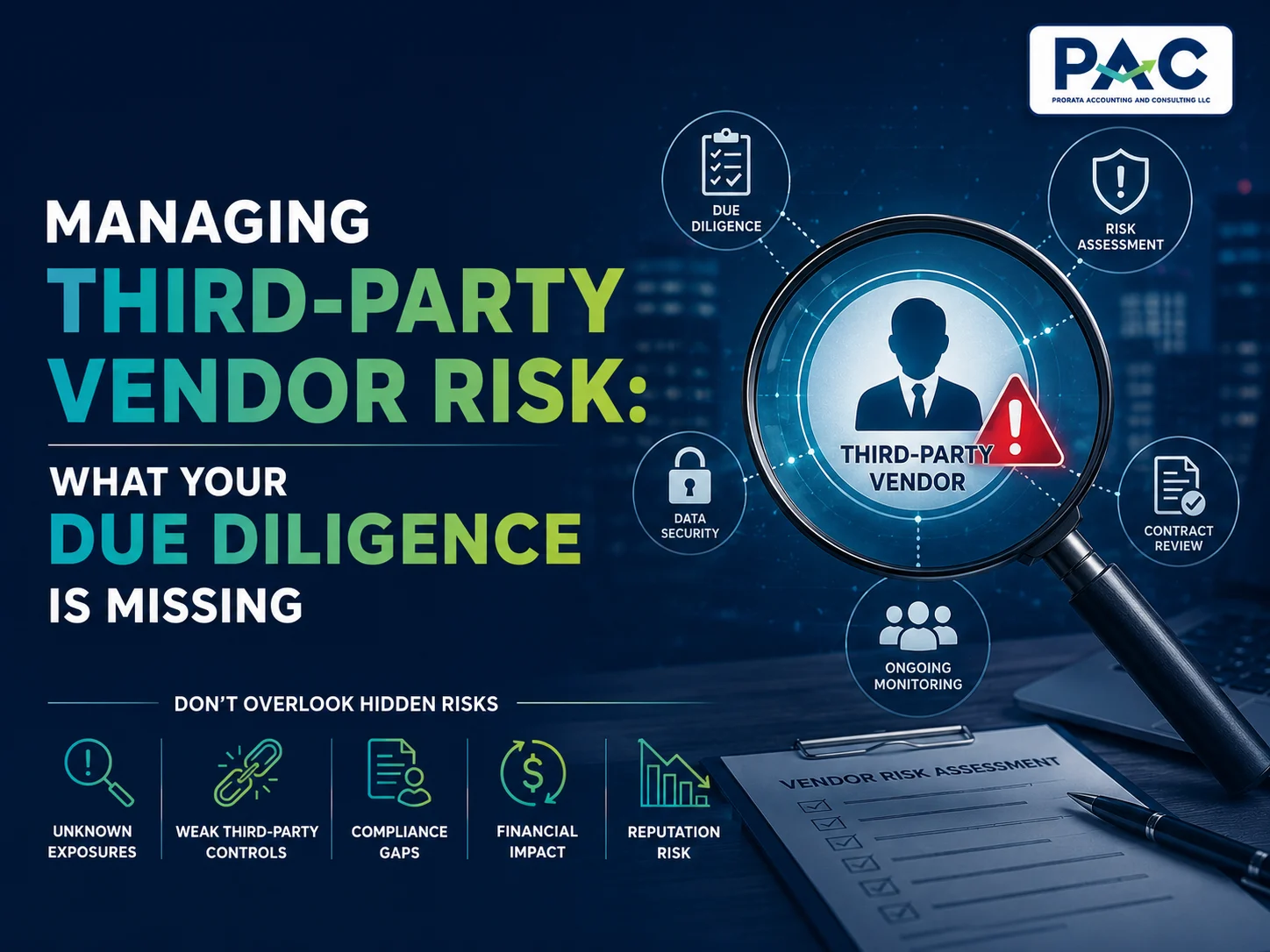
Managing Third-Party Vendor Risk: What Your Due Diligence Is Missing
-
Here is a question worth sitting with: Do you actually know what your vendors are doing with your data — and how they are processing it behind the scenes?
Most organizations have invested considerable effort in building third-party risk frameworks. They run due diligence checks, negotiate data protection clauses, and maintain vendor registers. Yet there is a quiet gap opening up in almost every one of these programmes — one that many compliance teams have not fully reckoned with.
The pace of technology adoption by service providers has outrun the frameworks designed to govern it. Vendors that once operated straightforward, predictable service models are now deploying sophisticated processing tools across their platforms — often without any formal disclosure to their clients. Your HR platform may be using advanced screening tools, your customer support vendor may be auto-generating responses, and your data analytics provider may be running your proprietary information through systems you have never reviewed or approved.
The uncomfortable reality is that many organizations do not know this is happening — until something goes wrong.
You are no longer just responsible for how you operate internally. You are responsible for how your vendors operate on your behalf.
The Compliance Blind Spot Hiding in Plain Sight
Traditional vendor due diligence was designed for a different operating environment. It asks the right questions about financial stability, security certifications, and contractual compliance — but it was never built to interrogate how vendors make decisions, what tools they deploy in service delivery, or whether those tools introduce regulatory, ethical, or reputational risk into your value chain.
Regulators, however, are increasingly unconcerned with that distinction. Accountability frameworks across multiple jurisdictions are placing responsibility squarely on the organization that deploys the service — not just the one that delivers it. This means that if a vendor's processes produce a discriminatory outcome, generate a misleading result, or mishandle personal data in the process, your organization may share the liability.
That is not a theoretical risk. It is a live compliance exposure — and one that most organizations are currently underweighted on.
Where the Risk Actually Sits
Third-party risk is rarely visible at the surface level. It tends to live two or three layers deep — in the subprocessors your vendors rely on, in the integrations they quietly plug into their platforms, and in the tools their own employees use to service your account.
The core risk categories that compliance professionals need to map across vendor relationships include data confidentiality and the adequacy of safeguards around how sensitive information is handled during service delivery; transparency gaps where vendors cannot adequately explain their processes, outputs, or the reliability of their systems; bias and discrimination risk in any vendor whose services touch employment, lending, healthcare, or customer-facing decision-making; and intellectual property exposure where ownership of generated outputs or processed data is contractually ambiguous.
Each of these risk categories intersects with existing compliance obligations — privacy law, consumer protection regulations, employment frameworks, and sector-specific rules. The challenge is that most vendor questionnaires were not designed to surface any of them.
Also Read : Fraud in Plain Sight: 5 Internal Control Gaps
What Good Due Diligence Looks Like Now
Re-engineering your vendor onboarding process does not have to be overwhelming. It starts with asking the right questions — systematically, and with documentation. What tools and systems does this vendor use in delivering services to us? How is our data processed and by whom? What controls exist to prevent misuse or unauthorized disclosure? How are outputs from their systems validated? Who within the vendor organization is accountable for governance over their operational tooling?
These are governance questions — and they belong in your due diligence framework just as naturally as a SOC 2 report or a data processing agreement.
Beyond due diligence, contractual protections matter enormously. Restrictions on how vendor-side tools may process your data, audit rights over vendor systems and controls, indemnification for vendor-caused harms, and disclosure obligations when a vendor materially changes its tooling — these provisions are still absent from the majority of vendor contracts currently in circulation. That is a gap worth closing before an incident closes it for you.
Contracts should evolve alongside the operating environment — not lag five years behind it.
Ongoing Monitoring Is a Critical Missing Piece
Perhaps the most underestimated dimension of third-party risk is how dynamic it is. A vendor that operates in a straightforward, low-risk manner today may introduce significant new operational complexity within the next quarter — without any obligation to tell you under a poorly drafted contract.
Without a mechanism for ongoing monitoring — periodic vendor certifications, technology change disclosures, or structured reassessments — your due diligence becomes outdated almost as soon as it is completed.
Effective vendor risk governance is not a checkbox exercise. It is a continuous process, embedded within broader third-party risk management and aligned with your organization's ethical commitments and regulatory obligations.
A Moment to Reflect
I work with organizations at precisely this inflection point — where the compliance frameworks they built with care are no longer fully keeping up with the operating environment they are navigating. Third-party vendor risk is one of the most consequential gaps I see right now, and it is also one of the most actionable.
The steps to address it are practical. The harder question is whether your organization is moving with sufficient urgency to take them, or whether it will take a regulatory finding or a reputational event to create that urgency instead.
If this raises questions about where your programme currently stands, I would genuinely welcome the conversation. Drop a comment below, or reach out to us - Contact Us
Questions worth discussing with your team:
- Has your procurement team ever formally asked a vendor what tools and systems they use in service delivery — and documented the answer?
- If a vendor's process produced a harmful or non-compliant outcome affecting your customers, how confident are you that your contracts protect you?
- Who in your organization owns third-party operational risk today — and is that ownership reflected in your governance structure?