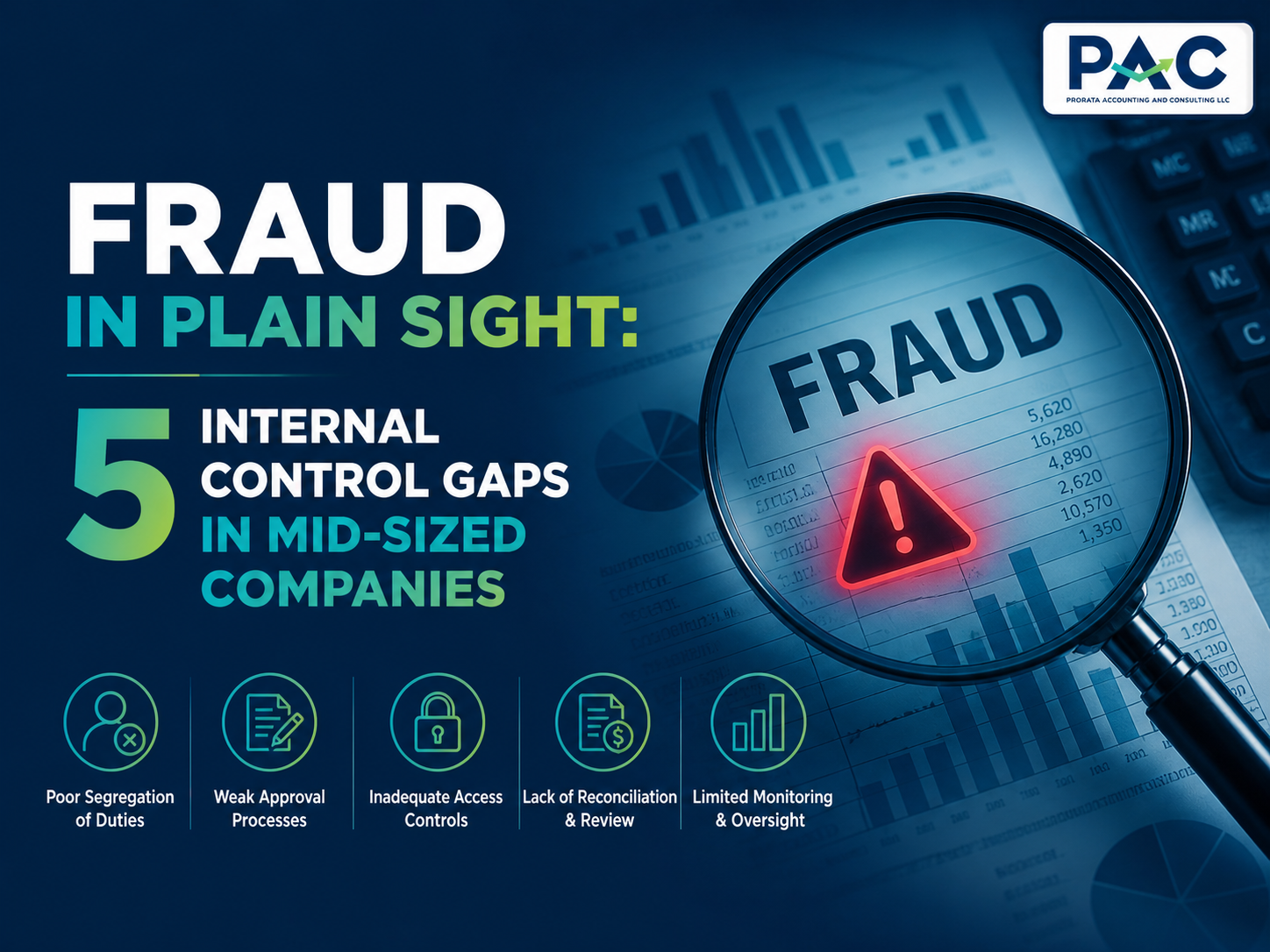
Fraud in Plain Sight: 5 Internal Control Gaps
-
Fraud tends to flourish in areas with weak controls. Most of the losses start small, then they spiral. Increased pressure on mid-sized companies is caused by fast expansion, lean or small teamwork, as well as a paucity of control. Such conditions may result in control lapses in the areas of finance, procurement, payroll, and approvals. Corruption can be camouflaged in day-to-day activities. It usually seems to be a regular activity. Harmful controls become more difficult when it comes to detection. Therefore, recovery is expensive.
Well-developed internal controls minimize risks. They help enhance accountability, and safeguard business values. Being aware of typical gaps enables leaders to take action promptly. By alleviating these problems, companies help to meet the compliance, minimize blame, and improve long-term operational sustainability.
1. Poor Segregation of Duties
The risk of fraud increases when one employee has numerous duties to perform. The individual can approve, record, and reconcile transactions that are for the same person. This mistake or manipulation is a red flag. Add review controls in situations of understaffing. Segregation of duties is a good strategy that enhances accountability and reduces risk.
2. Weak Approval Controls
Approvals can be present in the form of verbal or non verbal understanding. The payments can be made without complete documentation as staff lacks the understanding of key documentation requirements. Transactions can be approved too quickly by the managers without review or cross verification. There are no set boundaries that create opportunities to abuse. Establish position-based set approval levels. Apply two level approvals when performing sensitive transactions. Periodically perform a review of abnormal patterns.
3. Inadequate Vendor Oversight
Weak checks are known to have vendor fraud. Counterfeit vendors can get into systems without notice. The duplicate payments might go unnoticed. Inadequate invoice matching leads to a high level of fraud. Perform vendor screening prior to their onboarding. Review vendor master at least once a quarter especially while onboarding a new vendor. Maintain a list of black listed or red flagged vendors with detailed reports. Good procurement controls minimize financial risks in the shadows.
4. Limited Monitoring and Reconciliation
Where there is weak monitoring, fraud thrives. There can be late or poor reconciliations or no reconciliations at all. Abnormal entries can be skipped through without clear oversight on the transactions. Exception reports can be left alone. Check and balance anomalies. Research into unidentified and suspicious transactions promptly. Real time monitoring is the key to prevent fraud.
5. Weak System Access Controls
Uncontrolled access by users poses a grave danger. Use of common passwords undermines accountability and checks. Users can modify records in an unauthorized manner. System access of left employees might not have been revoked. Check system authorization on a periodic basis. Do away with unneeded access immediately. Build effective controls over data and finances.
From Vulnerability to Vigilance: Strengthening the Shield
Fraud seldom manifests itself without warning. The financial loopholes, in most cases, can be seen by control gaps. In mid-sized organizations, fraud often flourishes not because of a lack of integrity, but because of a lack of oversight. Medium-sized businesses are at a greater risk of such weak controls. Access controls, maker checker controls, continuous monitoring, authority segregation, and procurement due diligence are worth considering for the sustainability of a mid sized organisation. Well-developed internal controls and standard Operating Procedures (SOPs) decrease the exposure to fraud and promote trust and stability of operations.
By closing these loopholes, you can help your business to shift from a culture of implicit trust to explicit verification which will not only help you protect your bottom line, it will indeed help you build a foundation of accountability that supports sustainable growth. The best time to fix a leak is before the storm hits; start auditing your internal controls today to ensure your company’s future remains secured and resilient.
Also Read : How Forensic Audits Help Detect Financial Fraud